Link to today’s route: https://share.nebo.global/voyage/62419cb1-5cdb-4779-a874-c49e2922f372
It was another easy stretch to end our time on the Trent Severn Waterway. We had the locks to ourselves except for a pontoon boat in the last two. It only took us 11 days to return south on the waterway versus the 21 it took us initially going north. Each day was shorter too because there were so many fewer boats locking with us and the locks empty faster than they fill as we descended most of the way.
In all, we traversed 40 traditional chamber locks, a marine railway and two lift locks in Peterborough and Kirkfield (which are the only locks of their design in the western hemisphere) through 240 miles, once up and then back again.
We saw a lot of these zebra and quagga mussels all over the lock walls. They use tiny, thread-like structures called byssal threads to cement themselves firmly onto hard underwater surfaces of the lock walls. They were accidentally introduced to the Great Lakes basin by commercial shipping ballast water in the late 1980s and have since spread through the waterways, rivers, and canals. The razor-sharp edges can easily scrape or damage a boat’s gel coat and slice hands, which is one of the reasons we wear gloves in the locks.
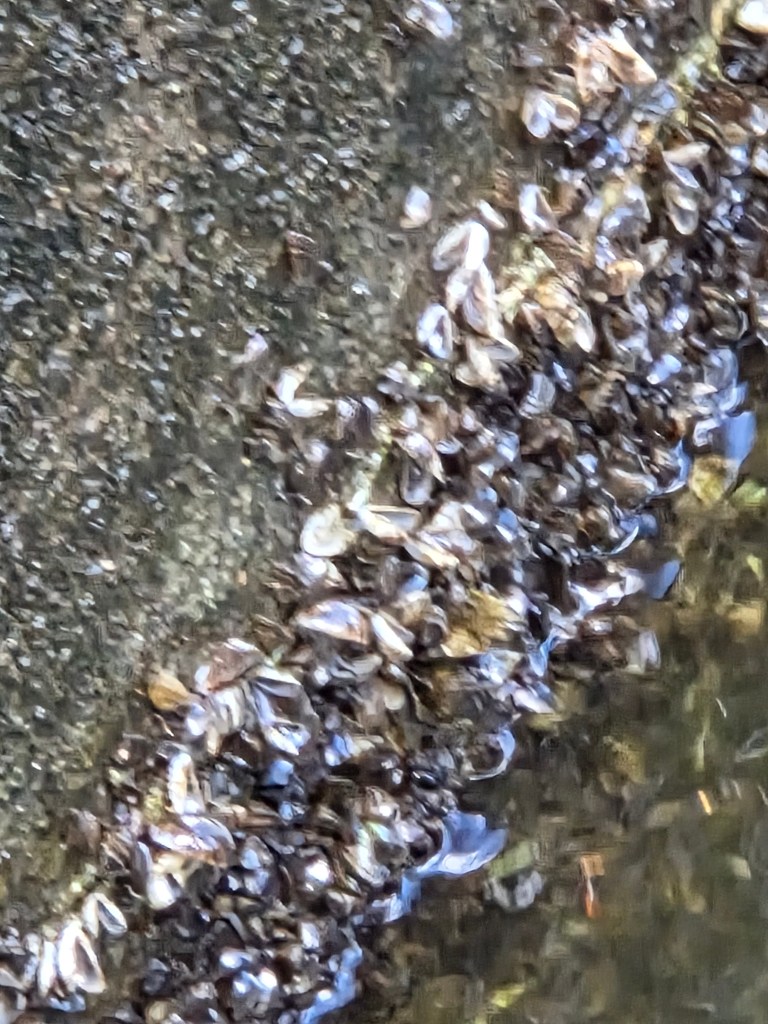
You can see them in this video squirting water at us. I am sure they are aiming for our eyes, although they couldn’t reach us this time because they were in a recessed part of the wall: https://photos.app.goo.gl/vcw9R1EFvsPYfvNn8
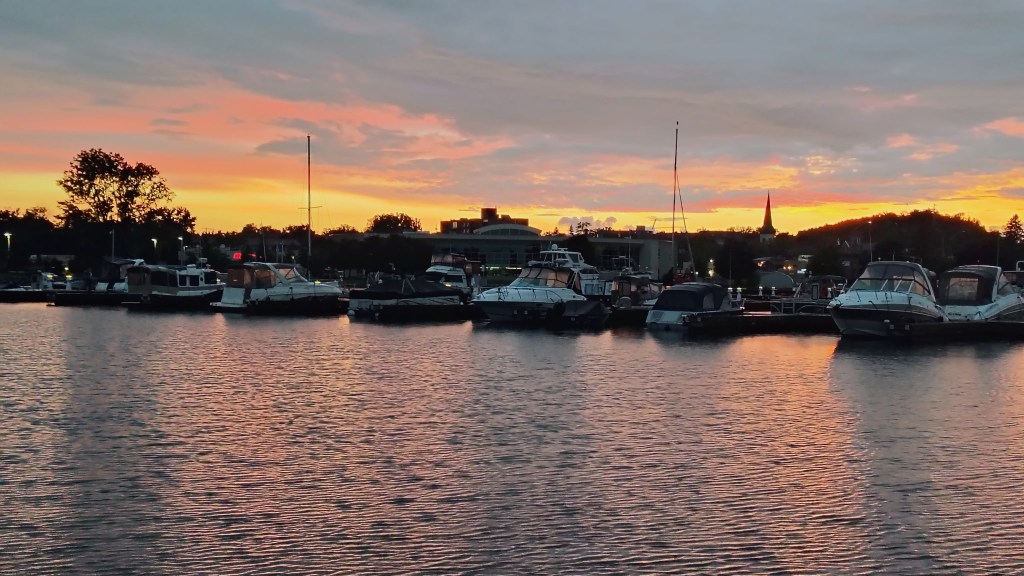
We stayed at the Trenton marina again to reprovision, do laundry, and wait for our package. We wouldn’t have been able to move anyway as there were rain storms each day.
Every night the geese have been making a huge ruckus. I have never heard geese so active at night so I consulted AI: “By late August, geese are finishing their summer feather molt and regaining their ability to fly. This makes them highly active, highly vocal, and easily startled as they test their wings and gather in massive, noisy groups on open water.”
“Flocks often move from evening feeding fields back to the safety of the water right around dusk or early night. Late-arriving birds honk loudly to announce their landing, and the geese already in the water honk back to guide them in or defend their personal space.”
“Flock Infighting: Geese can be incredibly testy and territorial. When hundreds pack into a small body of water for the night, they frequently drift into each other’s personal space, leading to loud, localized arguments and hissing matches.”
So typical geese drama, apparently.


Leave a comment