Link to today’s route: https://share.nebo.global/voyage/c91d5f2c-1a31-41ac-9834-3d173a5f11fe
Wed June 10: Sylvan Beach to Brewerton NY
The morning was overcast and humid, but still relatively cool. Suits me.
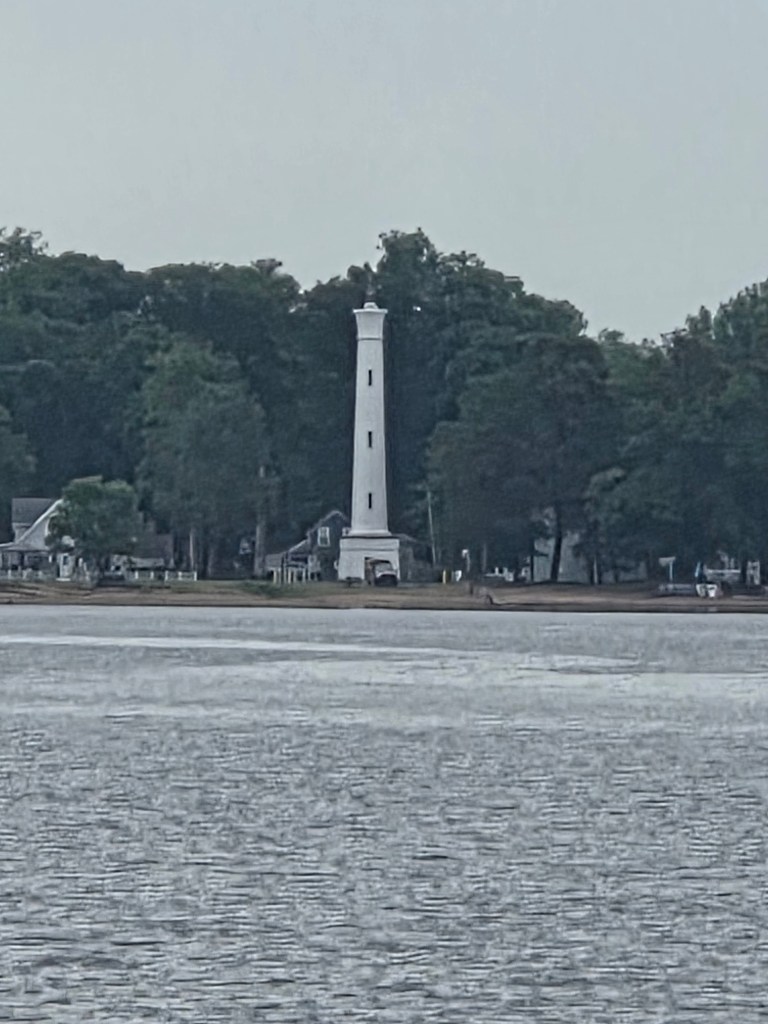
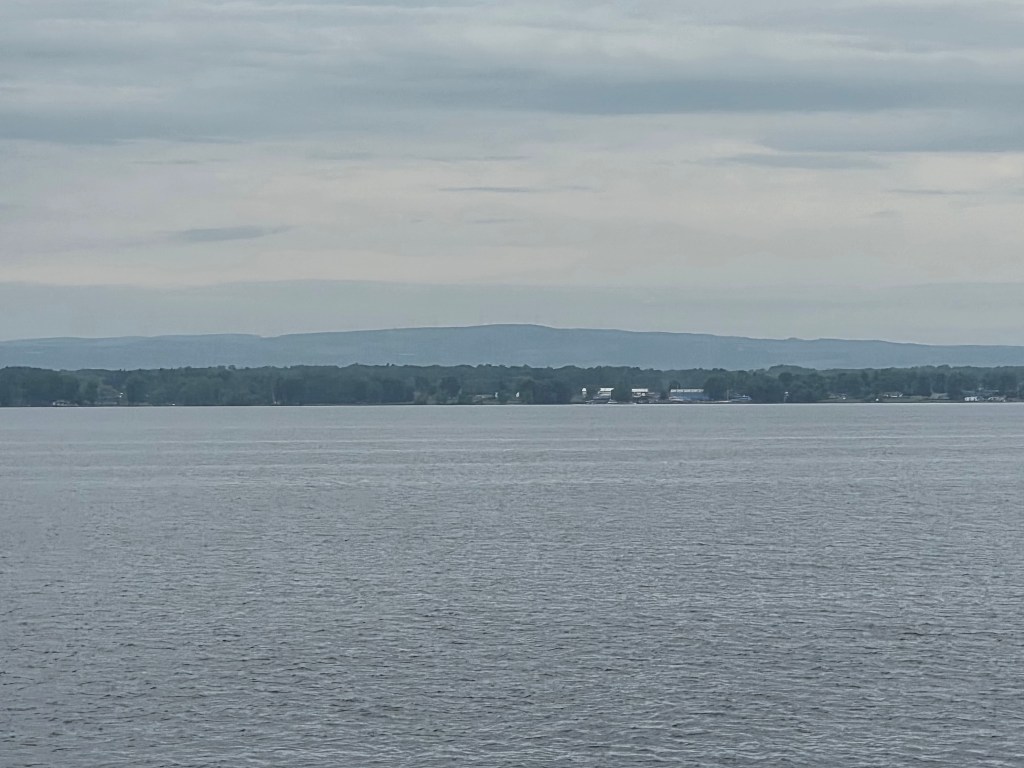
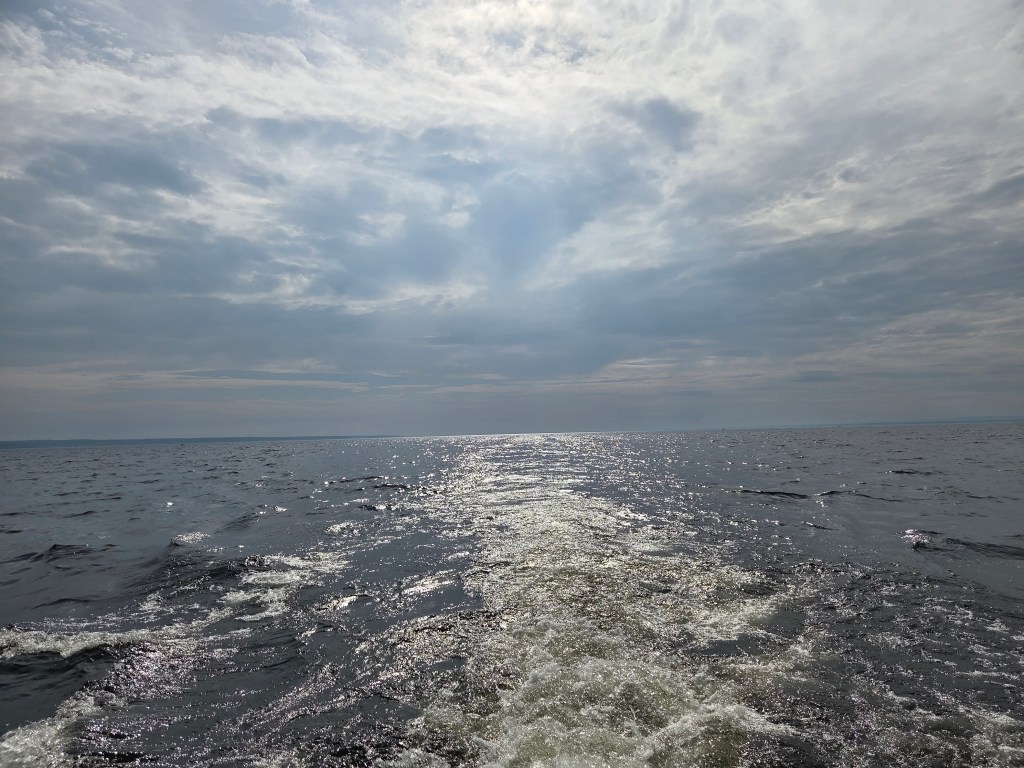
We only had about a three-hour run today to cross Lake Oneida to a town on the western tip called Brewerton. Lake Oneida is 20 miles east to west and about five miles north to south, so the rectangle it forms looks manmade, but it is not. It was formed roughly 10,000 to 12,000 years ago as a remnant of Glacial Lake Iroquois, a massive prehistoric body of water created by retreating glaciers at the end of the last Ice Age. As the ice sheets melted and shifted north, the lake drained, leaving today’s Oneida Lake behind in a deeper depression in the earth’s bedrock. The lake itself is a natural feature, but human engineering, like the Erie Canal, has altered its environment. The lake was incorporated into the canal system in the early 1900s, which involved adding dams and locks that stabilized and managed its water levels.
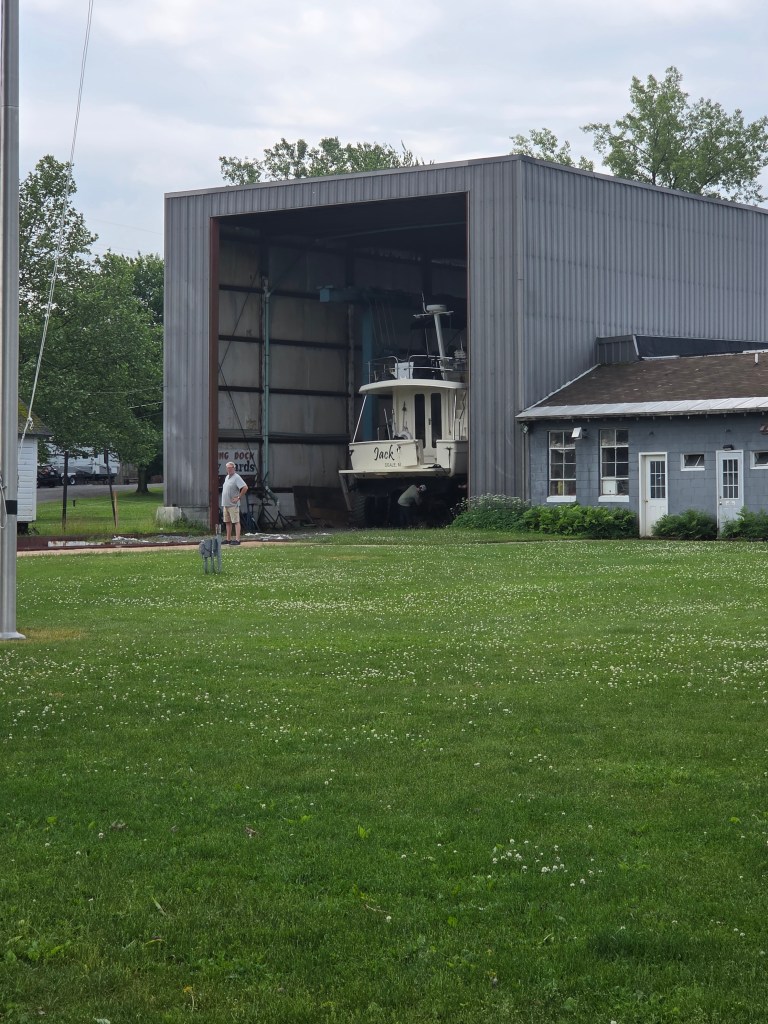
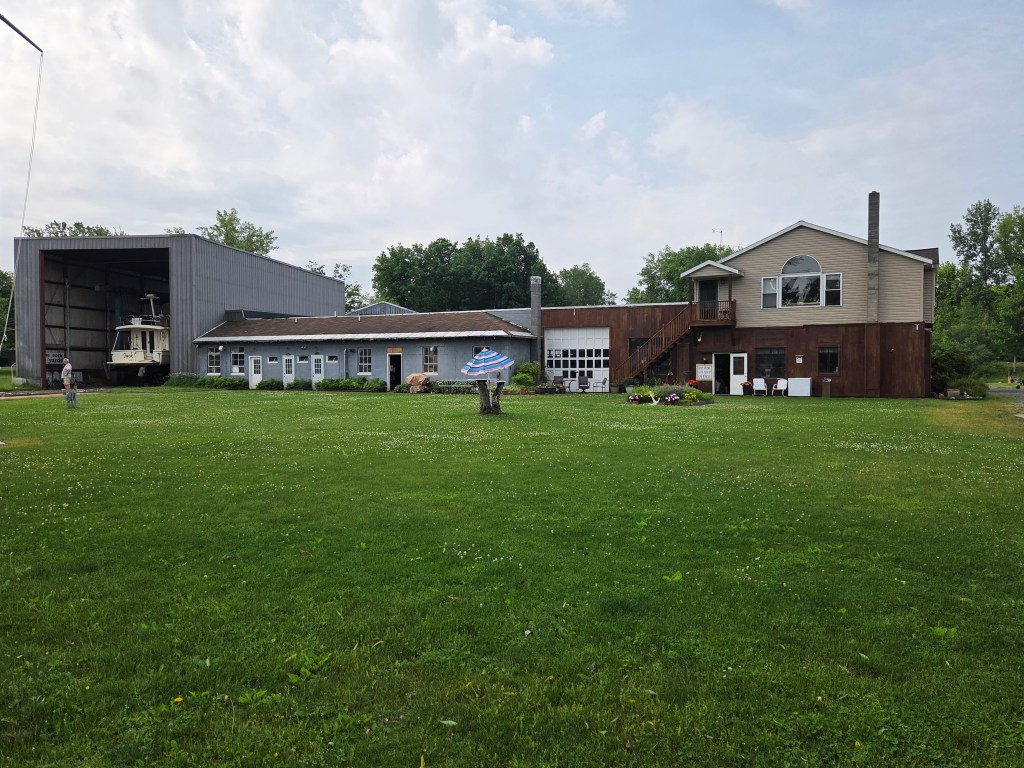
We stayed at a marina in a boatyard with a ship store that had everything a boater could possibly need or want. Kim, the owner of the boatyard, was extremely helpful and accommodating.
Thurs June 11: Brewerton NY
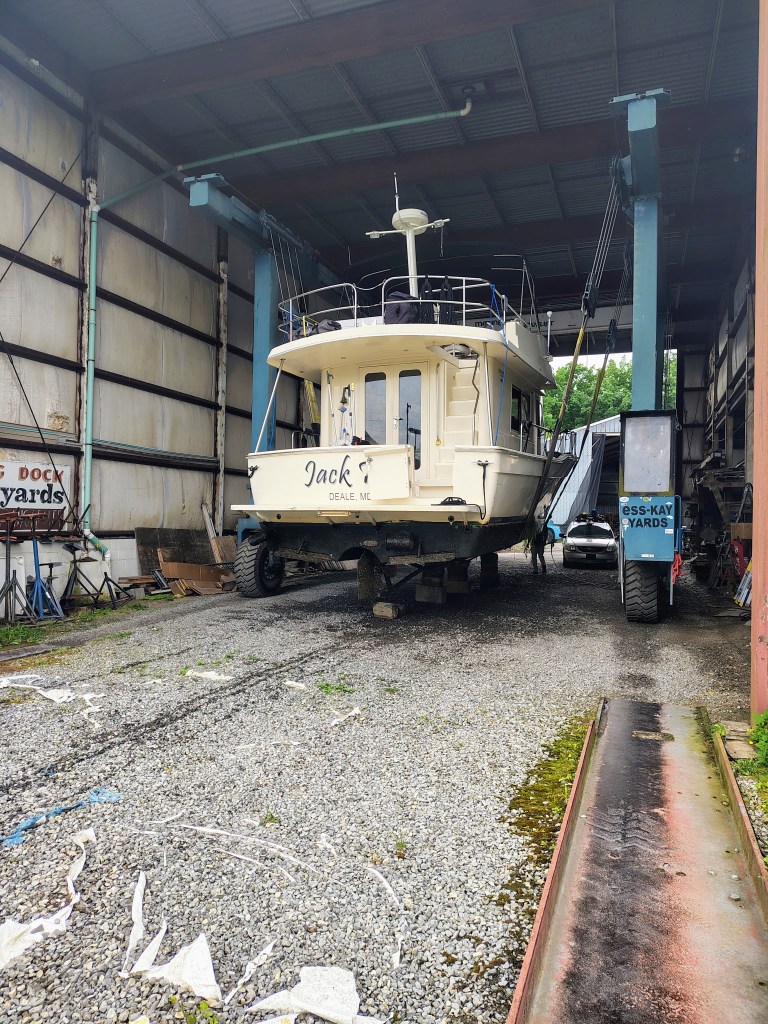
There was another day of thunderstorms and rain predicted, so we took advantage of the unplanned stopover and had the boat hauled out of the water so the hull could be power-washed (getting rid of the grime and barnacles helps with the fuel economy, such as it is), and we had new anodes attached to protect against galvanic corrosion. Yes, I do know what that is. At least I did once we had to have the anodes replaced the first time anyway. When there are different types of metal in water, particularly salt water, essentially a battery is created. The low level of electricity this creates corrodes one of the two metal types. To keep the corrosion from affecting the boat’s rudder or propeller, small rings of magnesium (referred to as sacrificial anodes) are attached in different places so the anode corrodes over time instead of the propeller shaft or hull. In salt water, zinc anodes are attached. It’s science. And you thought this blog would be boring.


Leave a comment